Shelf Space Is the Tell: Light Novels Are Finally Outgrowing Manga's Shadow
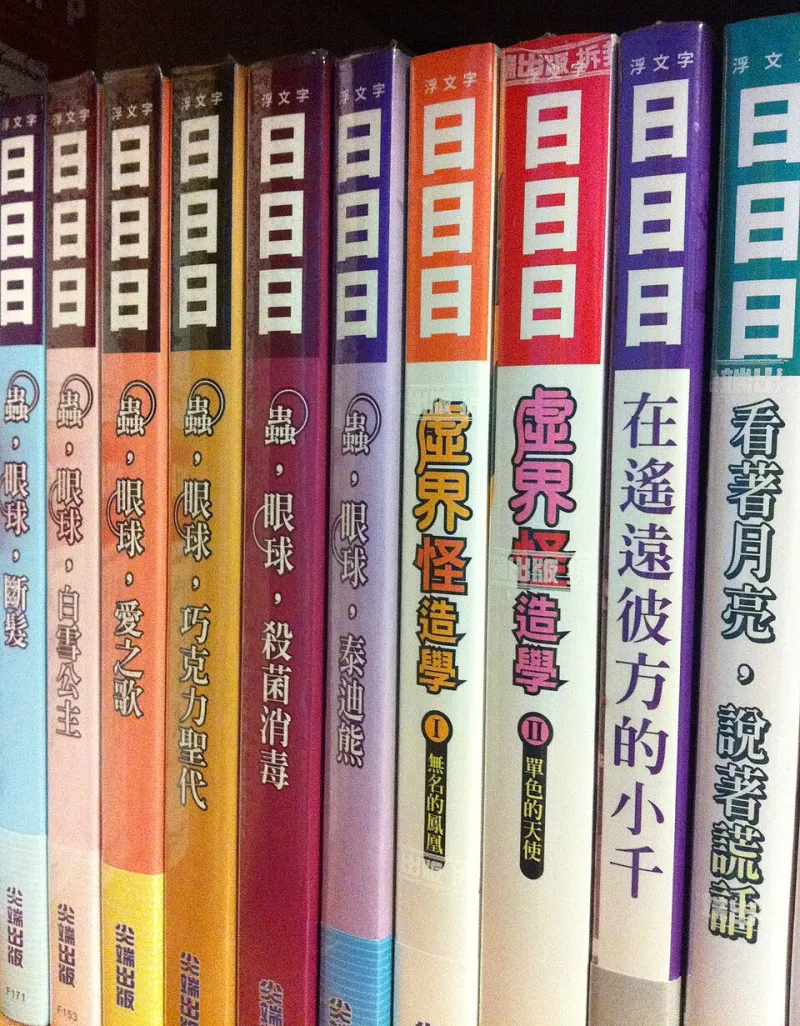
Photo: Kr.Mel, Public domain, via Wikimedia Commons
Walk into a big-box bookstore in the US this year and the manga wall is still the loudest thing in the building: bright spines, three rows deep, teenagers camped out on the carpet. But look one bay over. There's a second shelf now, and it isn't comics. Slim paperbacks with anime-style covers, volume numbers on the spine, and actual paragraphs inside. That shelf has been quietly expanding for a few years, and in 2026 it's big enough that a lot of fans are finally stopping to ask what's on it.
Light novels have been a dominant category in Japan for decades. In the US they spent a long time as an accessory — the thing you picked up because you couldn't wait for the next season of the anime. What's shifting is that the format is now large enough to stand on its own, and the current release calendar reflects that.
First, What Counts as a Light Novel?
"Light novel" isn't a genre. That's the first thing people get wrong. It's a publishing category, roughly the Japanese equivalent of mass-market paperback fiction with a designed-in visual identity. In practice that means three things:
- Length and pacing. Most volumes run 200–250 pages, broken into short chapters that often end on a hook. Authors write for commuters, not for readers who want a thousand-page epic.
- Illustrations. You'll usually get a handful of character plates and interior pieces scattered at key moments, not a full panel-to-panel narrative.
- Origin story. A huge share of what gets licensed started as a web serial on platforms like Shōsetsuka ni Narō or Kakuyomu, where amateur writers build an audience chapter by chapter before a label like Kadokawa or Shueisha picks them up.
Because of that web-serial pipeline, light novels tend to be structured for momentum: hit the beat, end the chapter, leave the reader wanting the next one. Sound familiar? It's the same muscle that makes anime episode breaks work.
Prose That Reads Like a Storyboard
The real difference between a light novel and a manga is not that one has fewer pictures. It's how the information arrives.
Manga gives you a page you can absorb in four seconds. Time, space, and emotional weight are controlled by the artist's eye. A light novel hands you a narrator — very often first person, very often chatty, sometimes unreliable — and lets you sit in their head. Internal monologues that anime has to work around with voiceover are the natural habitat of the form. Fight scenes that would cost a studio a fortune to animate are, in prose, two pages of rhythm and adrenaline.
That's also why adaptations of these books tend to come out unusually coherent. The source material was already written in scene-sized chunks with a built-in cliffhanger every few pages. There's less adaptation work to do than there is with a sprawling manga arc.
Why the Shelf Is Growing Now
A few things are working in the format's favor.
Digital-first publishing and faster turnaround. Labels have gotten much better at syncing English digital releases close to the Japanese launch, which means readers aren't waiting two years to find out what happens. Print editions follow, sometimes as omnibus collections.
Discoverability by adaptation, not by browsing. Probably the most effective marketing in this space is the anime itself. You finish a cour, you go looking, and there's a stack of volumes waiting for you — now with cover art that matches what you just watched.
Nicer physical editions. The days of flimsy covers are mostly behind us. Bigger trim sizes, dust jackets, color inserts tucked at the front: publishers know these are collector objects and price them accordingly.
Cost per hour. A manga volume is a cheerful $11–13 that disappears in an hour. A light novel is usually a few dollars more and takes a long weekend. For readers who devour a series in a sitting, prose is the better value proposition.
The "Awkward Cousin" Reputation
So why do so many fans still skip past it?
A few honest reasons. Some people tried one of the very popular titles, found the writing thinner than they wanted, and generalized. Others assume everything in the category is one very specific subgenre about a guy waking up in a game world — an impression that's several years out of date at this point. And some people genuinely just came to anime and manga for the visuals, which is a completely fair thing to want.
There's also the translation question, which is real. Quality varies by publisher and by translator. The best way to check is brutally simple: read the free sample. Every digital storefront offers one. Ten pages of sample will tell you whether the voice reads like a person or like a manual.
How to Try One Without Risking $15
- Pick a series you already watch. Reading the source of an adaptation you love is the lowest-friction entry point. You'll be invested before page one.
- Use a subscription. Several publishers run digital memberships that let you read large back catalogs for a monthly fee — a cheaper way to sample five series than buying one.
- Check your library. Library apps have started carrying these titles, and the hold list is a decent barometer of what your area is actually reading.
- Try an audiobook. The narration style of most light novels — conversational, chapter-driven — works unusually well in audio, and the catalog has filled out considerably.
The honest pitch isn't that light novels are better than manga. It's that they do a thing manga can't: they let you live inside a character's head for 200 pages and then make you buy the next volume immediately. If you've ever finished an anime season and complained that it ended too early, that shelf has been waiting for you the whole time.