The Joke Didn't Cross the Ocean: What Gets Lost When Japanese Variety Clips Go Viral
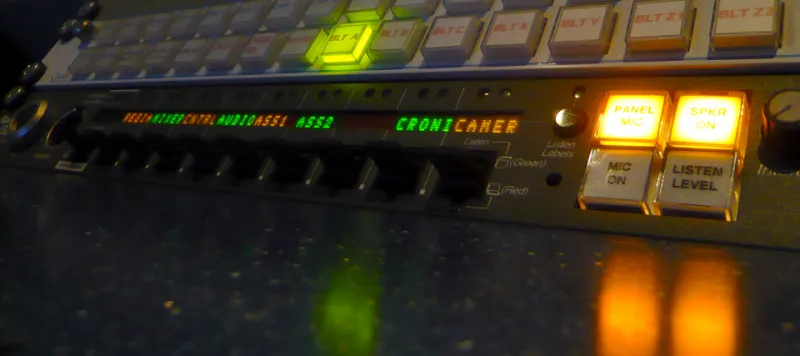
Photo: Morningfrost, Public domain, via Wikimedia Commons
You've seen one. Probably this week. A vertical video, slightly blurry, badly cropped from a 16:9 broadcast, with a burned-in English subtitle in a font that looks like it was chosen under duress. Two guys in matching outfits are screaming at each other. There's a caption in Japanese across the middle of the screen. The person who posted it has added a laughing emoji and the words "Japanese TV is UNHINGED."
And it is funny. That's the thing. Japanese variety and comedy clips genuinely travel, and they've become a real entry point for US audiences who otherwise wouldn't touch foreign-language television. But a lot of what makes those clips work is the stuff the clip sliced off, and it's worth being honest about what we're actually laughing at.
Why the Format Is So Addictive
Japanese variety TV is built on a model that will feel weirdly familiar to anyone raised on American late-night. There's a host, a panel of regulars, a rotating cast of guests, and a lot of banter. The difference is the volume and the pace. Where a US talk show gives you a monologue, two celebrity interviews, and a musical guest, a Japanese variety show might run a dozen segments in an hour, each one built around a pre-taped video that the studio panel reacts to in real time.
That's the key structural detail most clips erase. A huge amount of the humor isn't in the video — it's in the faces of the people watching the video. The format is reaction-driven, and reactions don't survive a crop that centers only on the footage.
Then there's manzai, the two-person comedy style that's been the backbone of Kansai comedy for generations. It runs on a fixed architecture: the boke, who says something absurd with total confidence, and the tsukkomi, who corrects them, usually with escalating volume. The jokes themselves are often groaners — puns, deliberate misunderstandings, obvious lies delivered straight. What sells it is rhythm. Manzai is closer to jazz than to stand-up: the material is loose scaffolding for a performance of timing, and timing is the one thing a subtitle can't carry.
What the Subtitles Quietly Decide
Here's where it gets messy. Every translated clip is a series of judgment calls made by someone who wasn't asked, and viewers never see the choices.
The pun problem. Japanese is dense with homophones, dialect variation, and wordplay that depends on how a word sounds rather than what it means. A dajare (a pun, basically a dad joke) often can't be translated at all. The subtitler's options are to explain it in three lines of text, replace it with an English pun that has nothing to do with the original, or skip it. All three are wrong in some way.
The telop problem. Japanese TV is plastered with on-screen text — big, colorful, animated captions that punctuate, editorialize, and sometimes deliver the actual punchline. This isn't decoration; it's a comedy instrument. When it gets translated as a small static subtitle at the bottom of the frame, you lose the timing, the emphasis, and the way the text lands on a beat.
The honorific problem. Who's calling whom what tells you the entire social hierarchy of a room — who's senior, who's being mocked, who's being politely destroyed. Drop the honorifics, and the power dynamic that makes a joke land evaporates.
The laughter problem. Some shows use audience laughter; some use studio reactions; some use on-screen laugh marks. All of it is a cue telling you where the joke is. Strip it out or mistime the subtitle, and the viewer is left staring at a pause that reads as awkward instead of loaded.
The "Weird Japan" Trap
There's a specific failure mode that hits almost every viral Japanese clip: the framing. Accounts that aggregate this content have learned that the highest-performing caption is some variation of "what is happening in Japan." The joke becomes national character rather than a bit performed by professionals who have spent years refining it.
That's a real loss. Manzai duos aren't eccentrics who wandered in front of a camera — they're trained performers, often from agencies that run their own comedy schools, grinding through small live venues before they ever get television time. When a clip gets posted with a caption that treats the performance as a symptom of a bizarre culture, it flattens years of craft into a curiosity.
And there's a subtler trap on the audience side: the assumption that anything you don't understand is part of the joke. Sometimes the guy in the animal costume is not making a point about Japanese society. Sometimes he's just doing a bit.
So How Do You Watch It Well?
Honestly? A few habits go a long way.
- Watch the full segment when you can. Ten minutes of context will teach you more about the format than a hundred clips.
- Follow translators, not aggregators. The people subtitling this stuff for free are doing genuinely hard work, and the ones with a following usually explain their choices. The repost accounts rarely credit them.
- Treat a joke that doesn't land as a border, not a defect. You don't have to understand every dajare. Nobody outside Japan understands every English pun either.
- Learn the furniture. Once you know what a tsukkomi does, the whole genre snaps into focus. It's like learning the rules of a sport — suddenly you can see the play developing.
- Don't demand that it be translated into an American comedy special. Japanese variety isn't failing to be a Netflix stand-up hour. It's doing something different, and it's a little loud and a little messy by design.
The clip economy isn't going anywhere, and frankly it's done something the licensing industry couldn't: it got a huge number of American viewers curious about Japanese television comedy. That's a win. Just remember that the version you're laughing at is a trailer, not the movie — and the person who got screamed at on screen probably rehearsed it.