Fan Made, Industry Approved: How Japan Turned Copyright Tolerance Into a Creative Goldmine
Imagine spending two years creating a fan-made game based on your favorite anime franchise. You pour everything into it — custom sprites, original music, a storyline that fills in gaps the official series never addressed. Then imagine the original publisher not only leaving it alone, but eventually hiring you to work on the official sequel.
In the United States, that scenario feels like a fantasy. In Japan, it's happened enough times to be considered a legitimate career path.
The doujinshi world — a term covering self-published fan works ranging from manga and novels to games and illustration collections — operates in a space that has no real Western equivalent. It is simultaneously unofficial and tolerated, legally ambiguous and culturally essential, and it has been quietly influencing Japanese pop culture for longer than most Western fans realize.
What Doujinshi Actually Is (And Isn't)
The word doujinshi literally translates to something like "same-person magazine" — publications created by groups of enthusiasts rather than professional publishers. The format has existed in Japan since the early twentieth century, but it exploded in the 1970s and 80s alongside the rise of manga and anime culture.
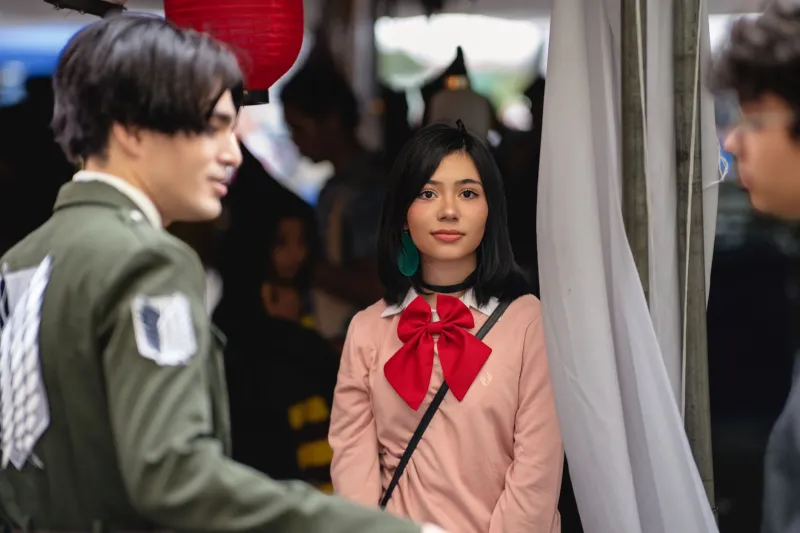
Today, the twice-yearly Comiket (Comic Market) event in Tokyo draws hundreds of thousands of attendees and features tens of thousands of independent creators selling their work directly to fans. The vast majority of that work is derivative — stories, art, and games built around characters and worlds owned by major publishers. And those publishers, for the most part, look the other way.
This isn't naivety on the publishers' part. It's strategy.
The Unofficial Agreement That Runs Everything
Japan's approach to fan works isn't codified in law. There's no formal "fan work exception" in Japanese copyright legislation. What exists instead is a cultural norm — an unspoken understanding between rights holders and fan communities that operates on a set of informal rules.
Generally speaking, publishers tolerate fan works as long as they're non-commercial (or small-scale commercial, like Comiket sales), don't directly compete with official products, and don't damage the franchise's reputation. Crossing any of those lines can still result in legal action. But within those boundaries, there's enormous creative freedom.
From the publisher's perspective, this tolerance makes economic sense. Active fan communities create free marketing. Doujinshi keeps a franchise culturally alive between official releases. And the creators producing this work are, by definition, the most passionate segment of the fan base — exactly the people you want to keep engaged.
For the fans, it's a creative apprenticeship. Making doujinshi teaches storytelling, art, game design, and audience engagement in ways that no school program can replicate. And it does so with real stakes — your work is out there, being read, being judged, building you a reputation.
When Fan Work Becomes the Real Thing
The pipeline from fan creator to professional has produced some genuinely remarkable careers.
Touhou Project is probably the most extraordinary example. What started as a doujin game series created by a single developer, ZUN, became one of the most expansive fan-creation ecosystems in gaming history. ZUN explicitly encourages derivative works, and the community has responded by producing thousands of games, albums, manga, and animations — many of which have achieved commercial success on their own terms. The line between "official" and "fan-made" Touhou content is so blurred that it's almost ceased to be meaningful.
Type-Moon, the studio behind Fate/stay night and the massive Fate franchise, began as a doujin visual novel sold at Comiket. The original Fate/stay night was a self-published fan work before it became the foundation of one of anime's most commercially successful universes.
On the individual creator side, there are countless artists and writers who built their professional reputations through doujinshi before being recruited by publishers. The practice is common enough that it functions as an informal hiring pipeline — publishers scout talent at Comiket the way American sports teams scout college athletes.
Why This Doesn't Translate Directly to the West
American entertainment companies have taken a very different approach to fan creativity, and the contrast is striking. Nintendo is famous for issuing takedowns against fan games, even beloved projects that took years to build. Disney's intellectual property enforcement is aggressive enough to have become a cultural shorthand for corporate overreach. The legal framework in the US — where copyright holders are expected to actively defend their IP or risk losing protections — creates structural incentives for suppression rather than tolerance.
There have been exceptions. Some Western publishers have developed more fan-friendly policies, and platforms like AO3 have created protected spaces for fan fiction. But the baseline cultural assumption is still adversarial in a way that Japan's isn't.
Part of what makes Japan's approach work is the specificity of the social contract. Doujinshi creators generally understand the implicit rules and stay within them. Publishers generally don't look for reasons to litigate. Both sides benefit, and both sides know it.
The Influence Flows Both Ways
Perhaps the most interesting dimension of this ecosystem is how fan interpretations can actually feed back into official content.
When a particular fan-created reading of a character becomes dominant enough — when thousands of doujinshi all portray a character the same way — that interpretation can start to shape how official creators develop that character in subsequent releases. It's a form of audience co-authorship that Western entertainment companies would find deeply uncomfortable, but that Japanese publishers have learned to navigate.
In some cases, official works have directly incorporated plot elements or character dynamics that originated in fan spaces. The relationship between creators and their communities in Japan is genuinely reciprocal in a way that's rare elsewhere in the entertainment industry.
What American Fans Can Take From This
For US-based fans watching this ecosystem from the outside, the doujinshi world is both inspiring and a little frustrating. The freedom to create, distribute, and even profit from fan work — within understood limits — is something American fan communities have been fighting for, often unsuccessfully, for decades.
But there's also something to learn from the underlying philosophy. The Japanese approach treats fan creativity not as a threat to be managed but as an extension of the culture a franchise creates. The fans aren't separate from the IP — they're part of it. And when publishers lean into that relationship rather than against it, something genuinely interesting happens.
The next time you see a piece of fan art that's better than the official promotional material, or a fan-made game that captures something the original missed — that's the doujinshi spirit. And in Japan, that spirit has been building careers and shaping canons for fifty years.