Quarter Drops and Championship Belts: The Japanese Arcade Roots of Competitive Fighting Games
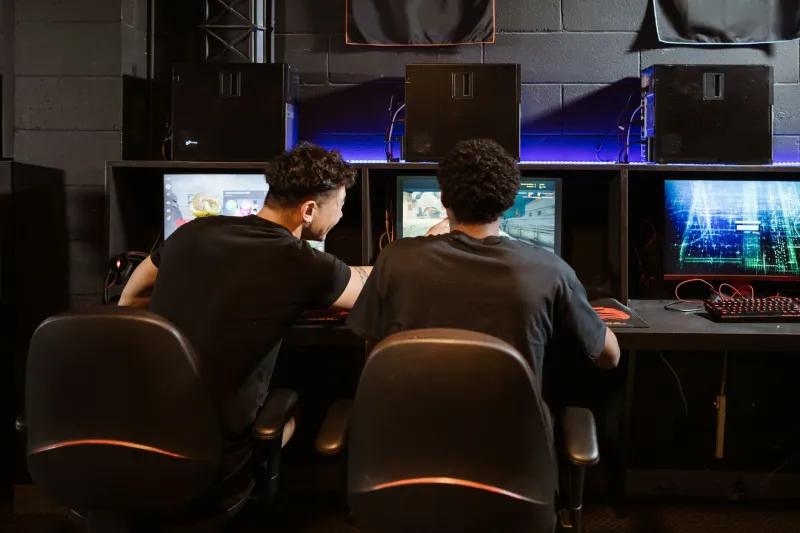
Somewhere in a convention center in Las Vegas every summer, thousands of people pack into a ballroom to watch two players sit three feet apart and attempt to mentally dismantle each other through a video game. The Evolution Championship Series — EVO — is the Super Bowl of fighting games, and it draws players from over 60 countries. The crowd roars. Commentators lose their voices. Clips go viral.
And almost none of it would exist without a row of arcade cabinets in 1990s Japan.
Fighting games have a strange place in the esports ecosystem. They're not the biggest genre by viewership numbers — that crown belongs to MOBAs and battle royales. But they have something most other competitive games don't: a lineage. A continuous, living history that connects a teenager putting 100 yen into a Street Fighter II machine in Osaka to a professional player competing for $100,000 on a main stage in 2024. Understanding that lineage is understanding why fighting games punch so far above their weight class in competitive gaming.
The Arcade as a Proving Ground
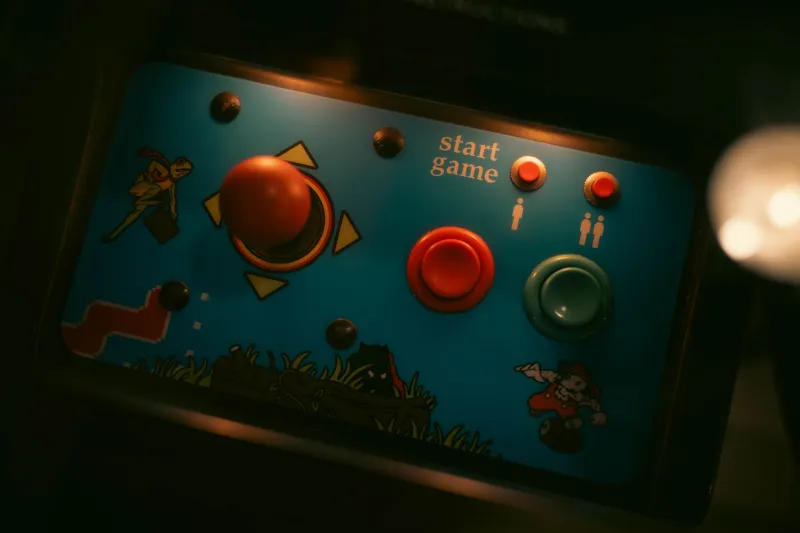
In Japan during the late '80s and '90s, arcades weren't just entertainment venues — they were social institutions. Game centers (gēmu sentā) were packed with machines, and the culture around them was intensely competitive. Losing a match meant surrendering your cabinet to the next challenger. Winning meant staying on, building a reputation, and eventually becoming someone other regulars respected — or feared.
This setup created something that no home console could replicate at the time: real stakes. Not prize money, but social capital. Your skills were on public display, constantly tested by strangers who wanted nothing more than to knock you off that stool.
Capcom's Street Fighter II (1991) became the lightning rod for this culture. It was deep enough that players could spend years learning its systems, but accessible enough that a newcomer could walk up and immediately understand the goal. The game spread through Japanese arcades like wildfire, then jumped to the US — where it found a similarly hungry audience in the pizza parlors, movie theater lobbies, and dedicated arcades that dotted American strip malls.
For a brief, beautiful moment in the early '90s, competitive fighting games were genuinely mainstream in America. Kids were memorizing Hadouken inputs on the school bus.
The Skill Ceiling That Keeps Players Hooked
Here's the thing that separates fighting games from most other competitive genres: the skill expression is almost entirely manual. In a MOBA like League of Legends, macro strategy, team coordination, and draft decisions carry enormous weight. In a battle royale, positioning and zone management can compensate for mechanical gaps.
In a fighting game, when you're sitting across from someone one-on-one, there's nowhere to hide. Every loss is yours. Every win is yours. The mental and technical demands are relentless — frame data, option selects, matchup knowledge, adaptation under pressure, execution under stress. Players talk about fighting games the way martial artists talk about their discipline. There's always another level.
That depth is exactly what creates the kind of dedicated player base that sustains a competitive scene for decades. The Street Fighter franchise is over 35 years old. Tekken launched in 1994 and just released Tekken 8 to massive success. The King of Fighters has been running since the '90s. These aren't games people play for a season and abandon — they're games people build careers around.
How Japanese Developers Shaped the Competitive Meta
Capcom, Bandai Namco, SNK, Arc System Works — the companies that define the fighting game genre are almost exclusively Japanese. And their design philosophies carry the fingerprints of that arcade heritage.
Japanese fighting game design tends to prioritize yomi — a Japanese word roughly meaning "reading" or "anticipating" your opponent. The best moments in a high-level match aren't about executing the flashiest combo; they're about correctly predicting what your opponent will do and punishing it. It's psychological. It's almost chess-like, except the chess pieces are doing spinning pile-drivers.
This design philosophy produces games that reward long-term investment. You can play Guilty Gear Strive for a thousand hours and still be discovering new layers. That's not an accident — it's a deliberate design choice rooted in the arcade model, where the goal was to keep players feeding quarters.
From Basement Setups to Twitch Mainstage
After the arcade era faded in the US through the late '90s and 2000s, fighting games went underground. The competitive scene survived in community-run tournaments, basement setups, and regional gatherings that operated almost entirely outside mainstream gaming media. EVO itself started as a small gathering called "Battle by the Bay" in 1996 — organized by passionate fans, not corporations.
That grassroots DNA is still part of what makes the FGC (Fighting Game Community) distinct from other esports ecosystems. It's louder, more personality-driven, and less corporate-polished than, say, the League of Legends Championship Series. Players are known by wild handles and genuine characters. The crowd at EVO reacts to a clutch comeback like a boxing arena reacts to a knockout.
Streaming changed everything. When Twitch gave individual players a platform, fighting game personalities — Maximilian Dood, Yipes, Justin Wong — built massive audiences just by being genuinely compelling competitors and analysts. The games' spectator-friendliness helped: even a casual viewer can understand that one player's health bar is almost gone.
Why They're Not Going Anywhere
Street Fighter 6 launched in 2023 with a modern control scheme designed specifically to lower the barrier for new players, while keeping the technical depth that veterans demand. It worked — the game brought in a wave of new players while reigniting interest among longtime fans. Tekken 8 followed a similar path.
Japanese developers are doing something smart: they're honoring the arcade tradition of deep, rewarding competition while actively building on-ramps for the Twitch generation. The result is a genre that's simultaneously one of the oldest in competitive gaming and one of the most relevant.
That quarter you dropped into a cabinet thirty years ago? It's still rolling.