Why Japanese Game Design Still Runs Circles Around Everyone Else
Let's get something out of the way upfront: this isn't a piece about which country makes "better" games in some objective sense. Gaming is global now, and there's incredible work coming out of studios from Seattle to Stockholm.
But there is a distinct Japanese design philosophy — one that emerged from the arcade floors of the early 1980s, got refined through the 16-bit console wars, and quietly shaped almost every mechanic you take for granted in modern gaming. And honestly? It deserves way more credit than it gets in mainstream gaming discourse.
Here's the case for why Japanese game design philosophy remains one of the most powerful forces in the industry.
The Arcade Was the Crucible
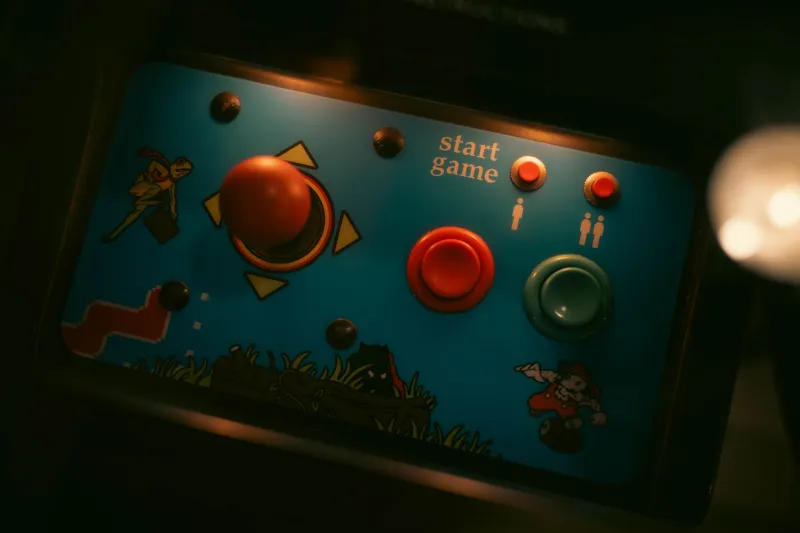
To understand Japanese game design, you have to understand where it was forged: the arcade.
In the late 1970s and early 1980s, Japanese arcades were intensely competitive commercial spaces. A game had about 30 seconds to hook a player — or they'd walk away and feed their quarter to the machine next to it. This created an almost brutal pressure on designers: fun had to be immediate, readable, and repeatable.
That constraint produced some of the most elegant design principles in gaming history. Shigeru Miyamoto, designing Donkey Kong for Nintendo, had to communicate jumping mechanics, obstacle avoidance, and goal-setting to a player who'd never seen the game before — in seconds, with no tutorial text, using only visual and audio feedback.
That's insane. And it worked.
The "fun first" philosophy — the idea that core mechanics need to feel satisfying before you layer on story, difficulty, or complexity — is a direct product of this arcade pressure. It's why picking up a Mario game for the first time still feels intuitive. The jump has been tuned to feel good in a way that's almost physical. You don't think about it; you just feel it.
Nintendo's Secret Weapon: Iterative Restraint
Nintendo is often credited with saving the American video game market after the 1983 crash, but the more interesting story is how they designed their way out of chaos.
The NES era Nintendo games — Super Mario Bros., The Legend of Zelda, Metroid — share a design principle that's easy to overlook: they introduce complexity gradually, almost invisibly. World 1-1 of Super Mario Bros. is a masterclass in teaching without telling. The first Goomba appears in an open space where the only logical response is to jump. The game is teaching you its core mechanic through environmental design, not a pop-up box.
This iterative approach — introduce a concept simply, then layer in complexity, then subvert the player's expectations — became the backbone of Nintendo's design language. You see it in Super Mario Bros. 3, in A Link to the Past, in Hollow Knight (which is heavily influenced by this tradition), and in modern titles like Breath of the Wild.
Western developers have certainly adopted this approach, but it originated in a specifically Japanese context: the idea that respect for the player means trusting them to learn organically, rather than over-explaining every mechanic.
Capcom and the Art of the Satisfying Loop
If Nintendo perfected the art of the tutorial-less tutorial, Capcom perfected something equally important: the gameplay loop.
Look at Street Fighter II. The core loop — select a fighter, learn their moveset, compete against opponents, improve — is simple enough to understand in five minutes and deep enough to spend decades mastering. The game's feel is central to this. Capcom's designers obsessed over frame data, hitboxes, and the tactile feedback of landing a special move. When Ryu's Hadouken connects, it sounds and feels like it should.
This attention to sensory feedback — what designers now call "game feel" or "juice" — is something Capcom, Sega, and their contemporaries understood intuitively. It's why Sonic the Hedgehog remains iconic: the sensation of speed was the product, and every design decision served that sensation.
Modern Western developers talk about "game feel" constantly now, but the vocabulary and the best early examples come almost entirely from Japanese studios.
Where Western Design Goes Differently
This isn't a knock on Western game development — it's an observation about different priorities.
American and European studios, particularly from the mid-2000s onward, leaned heavily into narrative complexity, graphical fidelity, and open-world scale. Games like The Witcher 3, Red Dead Redemption 2, and The Last of Us are stunning achievements in cinematic storytelling and world-building. Nobody's taking that away.
But there's a trade-off. Many of these games front-load enormous amounts of tutorial content, cutscenes, and hand-holding before the core gameplay loop becomes enjoyable. The "fun" is often deferred in service of story or atmosphere.
Japanese design — even in modern, story-heavy titles — tends to maintain that arcade-inherited principle: the moment-to-moment gameplay needs to feel good first. Elden Ring (FromSoftware) is brutally difficult, but the combat feels incredible from the first enemy encounter. Monster Hunter: World has a notoriously steep learning curve, but the loop of hunt-craft-upgrade is immediately legible and satisfying.
The Legacy Is Everywhere, Even When You Don't See It
Here's the thing about Japanese game design philosophy: it's so thoroughly absorbed into the DNA of modern gaming that it's become invisible.
The concept of lives and continues? Japanese arcade design. Boss battles with distinct phases? Japanese RPG and action games. Level design that teaches through environment? Nintendo. The satisfying "crunch" of a well-landed hit? Capcom, Sega, SNK.
Every time a Western developer talks about "tight controls" or "rewarding progression loops" or "readable level design," they're speaking a language that was largely invented in Japanese arcades and living rooms.
That's not a small thing. That's the foundation.
And as long as studios like Nintendo, FromSoftware, and Capcom keep shipping games that feel as good to play as they look — and they will — that foundation isn't going anywhere.