Stitches and Streams: How American Fans Turned Cosplay Into a Legitimate Career
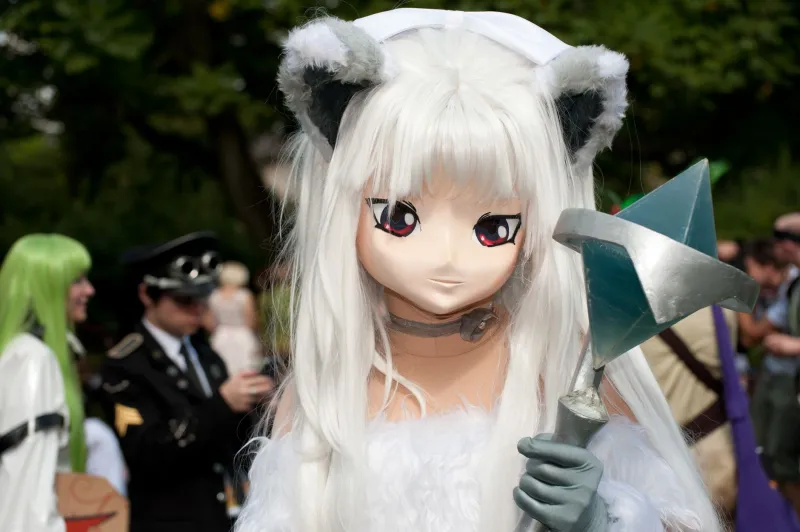
A few years ago, telling your parents you were going to make a living dressing up as anime characters would have earned you a very long, very uncomfortable dinner conversation. Today, that same announcement might prompt a follow-up question about your follower count.
Cosplay — the art of constructing and wearing costumes based on characters from anime, manga, video games, and other pop culture — has undergone one of the most dramatic transformations in American fan culture. What began as a scrappy, deeply personal creative practice has evolved into a recognized industry with its own economy, its own celebrities, and its own career ladder. And the roots of all of it trace back to Japan.
Where It Started: Japanese Fan Culture and the Birth of Cosplay
The word "cosplay" is itself a Japanese invention — a portmanteau of "costume" and "play" coined in the 1980s, attributed to Nobuyuki Takahashi of Studio Hard after he attended the 1984 World Science Fiction Convention in Los Angeles and was struck by the fan costumes he saw. He brought the concept back to Japan, where it took root in the doujinshi and anime fan communities that were already thriving around events like Comiket.
In Japan, cosplay culture developed with its own distinct etiquette and artistry. It was deeply tied to fan expression — a way to honor beloved characters through craft and performance. The emphasis was on accuracy, creativity, and community. Photographers and cosplayers developed collaborative relationships. Events had specific zones for cosplay photography. It was organized, passionate, and taken seriously as a creative pursuit.
When that energy crossed the Pacific and landed in American anime conventions during the '90s — events like Anime Expo, which launched in 1992 — it found fertile ground. American fan culture was already experimenting with costume-wearing at sci-fi and fantasy conventions, but the anime community brought a new level of craft and a different aesthetic entirely.
The Convention Boom and the Rise of Cosplay Culture
Through the 2000s, American anime conventions multiplied rapidly. Smaller regional events popped up in cities across the country — not just on the coasts, but in the Midwest, the South, anywhere a local anime club could rent a hotel ballroom. Attendance at major events like Anime Expo and Otakon grew into the tens of thousands.
Cosplay grew with them. As conventions got bigger, cosplay competitions got more elaborate. Craftsmanship standards rose. Contestants were building full armor sets from scratch, engineering light-up components, sculpting props that looked like they'd been lifted directly from a game cutscene. The masquerade — the cosplay competition held at most conventions — became a main event.
But the real shift came with social media.
Instagram, TikTok, and the Influencer Pipeline
When platforms like DeviantArt, then Facebook, then Instagram gave cosplayers a direct line to audiences beyond the convention floor, everything changed. A well-photographed cosplay could reach millions of people overnight. Cosplayers who were previously known only in regional convention circuits suddenly had global audiences.
Instagram in particular was transformative. The platform's visual format was tailor-made for cosplay content — high-quality photos, aesthetic feeds, and discoverability through hashtags. Cosplayers who understood how to work the platform built followings in the hundreds of thousands. Some crossed the million-follower threshold.
With audience size came monetization opportunities. Patreon allowed fans to directly support creators they loved. Twitch let cosplayers stream their build processes, turning the craft itself into watchable content. YouTube channels documenting costume construction attracted subscribers hungry for tutorials and behind-the-scenes access.
TikTok accelerated everything again. Short-form video gave cosplayers a new format — transformation videos, build timelapses, character performances — that spread wildly. The algorithm didn't care whether you were a household name. If your content hit, it hit.
The Business of Dressing Up
The economic ecosystem that's grown around cosplay in the US is genuinely impressive in its complexity. At the top end, established professional cosplayers are running what amount to small media companies.
Revenue streams include convention appearance fees (major events pay prominent cosplayers to attend and interact with fans), brand partnerships (gaming companies, anime streaming services, and even mainstream brands pay for promotional cosplays), merchandise sales (prints, calendars, branded products), subscription platform income, and licensing deals. Some cosplayers have negotiated contracts with game developers to serve as official ambassadors for specific titles or characters.
The materials industry has grown around them. Specialty foam suppliers, 3D printing services, thermoplastic vendors, and wig companies have all scaled up to serve the cosplay market. Entire businesses exist solely to sell cosplay-specific supplies. Etsy has a massive cosplay economy — both for finished costumes and for components that crafters build from.
Estimates of the US cosplay market's size vary, but figures in the range of $1-2 billion have been cited in industry reports when accounting for convention spending, materials, services, and influencer marketing. That number is almost certainly conservative.
The Craft Hasn't Been Lost
Here's what's easy to miss when you're talking about economics: the craft itself has gotten better. The explosion of tutorials, communities, and shared knowledge has raised the average skill level dramatically. Techniques that were closely guarded secrets in the early convention days are now freely shared on YouTube. A teenager in rural Ohio can learn to make professional-quality armor by watching creators who've refined their methods over years.
The connection to Japanese source material remains central. When a major anime drops — Jujutsu Kaisen, Chainsaw Man, Demon Slayer — the cosplay response is almost immediate. American fans are engaging with Japanese pop culture in one of the most direct, personal ways imaginable: by embodying it, by spending months learning to recreate it, by performing it for communities that share the same love.
That's not a transaction. That's devotion. And it turns out devotion, when enough people share it, becomes an industry.
The parents who were skeptical a decade ago? A lot of them are proudly sharing their kid's convention photos on Facebook now.