Alone in a Crowd: How Anime Captures the Feeling No One Else Wants to Talk About
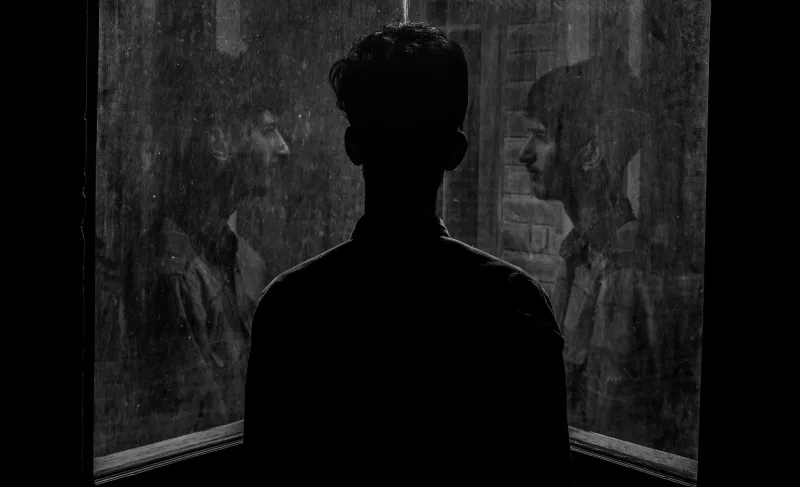
Let's be honest for a second. You've probably had a night where you were surrounded by people — at a party, in a dorm, scrolling through a full social media feed — and still felt completely, inexplicably alone. It's one of the weirdest contradictions of modern life, and it's also one of the hardest things to explain to someone who hasn't felt it.
Anime gets it. Not in a hand-wavy, vague sort of way. In a specific, uncomfortable, oh-that's-exactly-it kind of way that can make you pause an episode and just sit with the feeling for a minute.
And right now, in a country where the U.S. Surgeon General literally issued an advisory about a loneliness epidemic, that matters more than ever.
The West Flinches. Anime Doesn't.
Western storytelling has a complicated relationship with loneliness. We tend to frame it as a problem to be solved — the loner finds their crew, the outcast gets accepted, the introvert learns to open up. The arc almost always bends toward social redemption. Which is fine! But it also means we rarely just sit with the feeling. We rush past it toward the fix.
Japanese storytelling, particularly in anime, does something different. It lingers. It lets characters exist in their isolation without immediately signaling that rescue is on the way. Sometimes the loneliness is the story, not just a setup for something more comfortable.
That's not a cultural accident. Japan has its own deeply documented struggles with social isolation — hikikomori (severe social withdrawal), karoshi (death from overwork), the quiet epidemic of elderly people going weeks without human contact. These aren't abstract concepts. They're lived realities that have worked their way into the cultural vocabulary, and by extension, into the stories Japan tells itself.
The Shows That Actually Go There
Take Welcome to the NHK, a series that aired back in 2006 and still feels startlingly current. The main character, Satou, is a hikikomori in his mid-twenties who hasn't left his apartment in years. The show doesn't glamorize it or play it purely for laughs. It's messy and uncomfortable and sometimes genuinely hard to watch — because Satou's internal logic, the way he constructs elaborate conspiracy theories to explain his own failures, is disturbingly relatable. Plenty of American viewers have described watching it as the first time they felt truly seen by a piece of fiction.
Then there's A Silent Voice, the 2016 film that tackles isolation through two very different lenses: a deaf girl who was bullied into silence, and the boy who did the bullying and now carries his own crushing guilt and social exile. What makes it remarkable is that neither character is let off the hook, and neither is handed an easy resolution. The film earns its emotional payoff by refusing to skip over the hard parts.
March Comes in Like a Lion is another one worth mentioning. It follows a teenage professional shogi player living alone in Tokyo, cut off from family, struggling to connect with almost everyone around him. The show uses visual metaphors — drowning imagery, empty rooms, oppressive silence — to externalize what depression and loneliness actually feel like from the inside. It's the kind of thing a therapist might recommend if therapists recommended anime.
And for something more recent, Bocchi the Rock! took the internet by storm partly because its anxious, friendless protagonist resonated so hard with a generation of young people who came of age during COVID lockdowns. The comedy is real, but underneath it is a portrait of social anxiety so accurate it made a lot of viewers laugh and then immediately feel a little too understood.
Why Japanese Storytelling Hits Different Here
There are a few reasons these stories land so hard for American audiences specifically.
First, there's the distance. Because anime is set in Japan — different schools, different cities, different social structures — American viewers can engage with these stories without their defenses fully up. You're not watching someone who looks like you, lives in your city, goes to your kind of school. That slight remove actually makes it easier to recognize yourself in the character, weirdly enough. The emotional truth sneaks past the part of your brain that would normally say that's not me.
Second, anime doesn't moralize. It's not trying to teach you that loneliness is your fault for not trying hard enough, or that the solution is just to put yourself out there more. It presents the experience without a lecture attached, which feels rare and genuinely respectful.
Third — and this one is a little harder to articulate — there's something about the visual language of anime that makes internal states feel real in a way live-action sometimes can't. The way March Comes in Like a Lion renders depression as literal dark water closing over a character's head. The way Bocchi the Rock! visualizes social anxiety as its protagonist literally folding herself into a cardboard box. Animation can externalize the invisible, and loneliness is nothing if not invisible.
What This Means for Us Right Now
A 2023 Gallup survey found that around 20% of Americans reported feeling lonely "a lot of the day" the previous day. That's one in five people. For younger Americans — Gen Z in particular — the numbers are even starker. These are the same people who grew up watching anime, who discovered Your Lie in April or Neon Genesis Evangelion at exactly the right (or wrong) moment in their lives and felt something shift.
It's not a coincidence that anime fandoms tend to be some of the most fiercely connected communities online. There's something about gathering around stories that acknowledge hard feelings — rather than papering over them — that creates genuine bonds between people. You watch a show that makes you feel less alone, and then you find other people who felt the same way, and suddenly you're a little less alone in real life too.
That's not a small thing. That's actually kind of the whole thing.
The Takeaway
Anime isn't magic. It's not therapy. It won't fix whatever it is you're carrying around. But there's real value in a medium that takes loneliness seriously — that treats it as a complex, specific, deeply human experience rather than a character flaw to be corrected by the third act.
If you've never explored anime through this particular lens, some good starting points are A Silent Voice (available on Netflix), March Comes in Like a Lion (Crunchyroll), and Bocchi the Rock! (Crunchyroll). Fair warning: you might need a minute after some of these episodes. That's kind of the point.
The best stories don't just entertain you. They remind you that whatever you're feeling, someone else felt it first and thought it was worth putting into words — or in this case, into frames.